Menopause Society Certified Practitioners in Alabama
37 practitioners have an office in Alabama, and 53 more can see patients here by telehealth. 55 of them are certified by the Menopause Society, and the most are in Huntsville, Birmingham and Dothan.
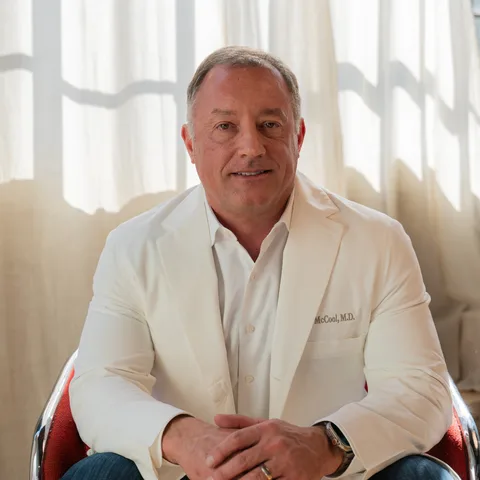
ICONA Health is a hormone clinic in Birmingham that Dr. McCool founded with his wife, after a year in which her own perimenopause went unrecognized and hormone therapy turned it around. He came to this work as a board-certified urologist who noticed that men were offered testosterone quickly while women in perimenopause were passed over, so he trained in women's hormone health. Care begins with a consultation about your symptoms, history and goals, and labs can be drawn at that first visit with treatment sometimes starting the same day. Anyone who continues joins a monthly membership that covers lab monitoring, follow-up visits, refills and messaging between visits, with a check-in every three to six months. Treatment plans draw on estrogen, progesterone, testosterone, vaginal estrogen and weight loss medication, and they will use pellets when they suit someone, though they say they are not a pellet-only clinic and often start women on a testosterone cream instead. They are a specialty clinic rather than primary care, so they ask you to keep your own regular doctor.
Dr. Moayedi is a Dallas OB/GYN who specializes in complex family planning and runs her own small practice. Her perimenopause and menopause care happens entirely by video, and she reviews your history and explains the science behind the treatment plan. Between visits you can text her directly with questions. Most patients need one or two follow-up visits to adjust doses, then a yearly visit to keep refills going. Prescriptions go to whatever pharmacy you choose. The practice doesn't take insurance, but it works with nonprofit funds to help Texas patients cover visit costs.
Diana Kumar is a board certified OB-GYN who co-founded Gliss Wellness, a virtual practice built around perimenopause and menopause. All care happens by video and secure messaging, so there is no office to visit. A menopause visit runs about 30 minutes and ends with a plan and prescriptions for an initial three month period, followed by a check-in visit before refills continue for the rest of the year. She prescribes hormone therapy when it fits, can order labs and scans, and sends prescriptions to the patient's own pharmacy. She also sees women for weight counseling and for urgent gynecology problems handled through a short written form. Her stated areas of interest are PCOS, sexual dysfunction, bone health and longevity medicine.
Options Wellness is a small women-owned clinic in Muscle Shoals run by two nurse practitioners and a nurse administrator. They focus on gynecology and midlife care for women who are not pregnant, and see patients from puberty onward. Hormone therapy comes as pills, patches, sublingual forms or injections, and the choice is made together with the patient. The practice does not offer pellets. Vaginal estrogen is used for dryness and to help prevent urinary infections, and testosterone is offered for low desire. Amy Beth spent years in cardiovascular care and the cath lab, and the clinic puts real weight on heart and metabolic risk, not only symptom relief.
Jackie Stone, MD sees women entirely by telehealth, in a practice she runs alone. She is board certified in obstetrics and gynecology and in obesity medicine, and treats perimenopause, menopause and primary ovarian insufficiency alongside PCOS, genitourinary symptoms, sexual wellness, and skin and hair changes. First visits run a full hour and cover past records, labs and a treatment plan. Ongoing care is by monthly membership or visit by visit, with direct messaging for members.
A solo, fully virtual membership practice for midlife women across Texas, run by a physician board certified in family, obesity and lifestyle medicine who is also a Menopause Society Certified Practitioner. The membership covers an hour-long first consultation, seven follow-ups a year, secure messaging between visits, prescription management and lab interpretation, while medication, labs and imaging are billed separately. Hormone therapy is offered but not part of every plan, with non-hormonal options discussed instead. The practice declines to use hormone pellets, citing unpredictable dosing. Care is given in English and Spanish, and the physician describes herself as working alongside a patient's existing doctors rather than replacing them.
Kaelie Salisbury is a physician assistant at Clinic for Women, a large OB-GYN practice with offices in Huntsville and Madison. She grew up in Huntsville, started practicing there in 2022 and joined the clinic in 2024. The practice covers gynecology and pregnancy care, and menopause visits fit within that general women's health setting. Its menopause page describes estrogen and progesterone therapy as well as non-hormonal options like low-dose antidepressants for hot flashes. There is an on-site lab that needs no appointment, but the clinic does not do mammograms, so you book those directly with an imaging center.
Pam Jones is a nurse practitioner at Aventa Specialized Women's Care, a large OB/GYN practice in Dothan that also delivers babies and does gynecologic surgery. She joined in March 2026 and says menopause is her particular interest, with a focus on women going through perimenopause and menopause. She started out in 1997 as a labor and delivery nurse and has spent her whole career caring for women. Menopause visits here are ordinary office visits billed to insurance. The office sits next to Flowers Hospital, so many patients book a mammogram or bone density scan on the same day as their annual visit. The practice is taking new patients and has online scheduling.
Dana Johnson is a registered nurse who spent about 20 years in the ICU before founding Qavah Functional Wellness, a telehealth-only practice. She started it after her own Long COVID turned into autoimmune and gut problems and then a hard menopause transition. Hormone therapy is offered to Alabama residents only, while the lab and gut health services also reach a few other southern states. Each hormone plan starts with lab work and a consultation, and bioidentical hormones come as creams, gels, pills, troches or injections. Prescriptions are written by the practice's licensed providers rather than by Dana, who is a nurse. New patients start with an online consultation request, and the team calls back within one business day.
Therapy for Midlife is Dr. Rashkis's solo virtual practice, and every session runs over video. She works with women moving through perimenopause and menopause, and she also sees men in midlife and couples. Care is talk therapy only, and the FAQ says the practice does not prescribe medication, though she will discuss a referral to a prescribing physician and can speak with your own doctor if you give written permission. For menopause she uses cognitive behavioral therapy for the distress that comes with hot flashes and CBT for insomnia for sleep trouble, alongside acceptance and commitment therapy and emotionally focused therapy. Sessions are 50 minutes, usually weekly at first and then spaced further apart, and she says most clients need five to fifteen of them. She is a lifelong competitive athlete who says she went through her own midlife upheaval, which is what led her to start the practice.
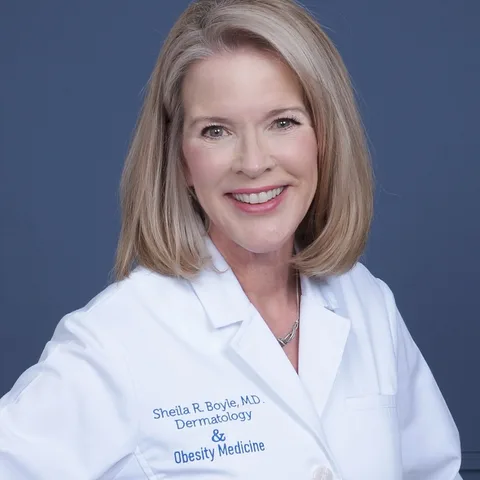
A solo direct-pay practice in Lone Tree whose stated scope is dermatology, cosmetic procedures and medically supervised weight management. The physician is board certified in dermatology and obesity medicine. Every initial visit is by video, with in-person follow-ups by appointment, and the practice does not bill insurance. Hormone replacement therapy is named only as one reason for a new-patient visit on the fee schedule, and no hormone or menopause care is described anywhere else on the site.
Concierge Medicine of Westlake is Dr. Fiffick's own practice. She keeps the patient panel small and runs it on annual memberships rather than billing insurance. The women's health membership covers non-obstetric care through midlife, with perimenopause and menopause symptom management alongside bone health, cardiovascular risk and urogenital health, and it includes hormone prescription management when she judges it appropriate. Members get 30 or 60 minute visits, same or next day openings, and her direct phone, text and email, and virtual visits are offered as a supplement with prior approval when an exam is not needed. She came to women's health through family medicine after being told early on that the only route was OB-GYN, then spent two years in the Cleveland Clinic's Specialized Women's Health fellowship. As an osteopathic physician she also does hands-on manipulative treatment, which patients can buy as its own membership or one visit at a time.
Gliss Wellness is a virtual-only OB/GYN practice Dr. Walsh co-founded with a second board-certified OB/GYN, and menopause care is its main focus. Care starts with a 30-minute video consultation about your symptoms, and if hormone therapy suits you, you leave with prescriptions for the first three months. A follow-up at three months keeps refills going for the rest of the year, and refills in between happen by message through the patient portal. There is no membership, and you fill prescriptions at your own pharmacy. The doctors can't examine you in person but can order labs and other tests. Dr. Walsh's own interests include pelvic pain, endometriosis, fibroids and weight loss, and a free 15-minute call lets you meet the team before booking.