290 practitioners have an office in Florida, and 198 more can see patients here by telehealth. 309 of them are certified by the Menopause Society, and the most are in Miami, Orlando and Jacksonville.
Takes Blue Cross Blue Shield, Cigna +8 · first visit $275
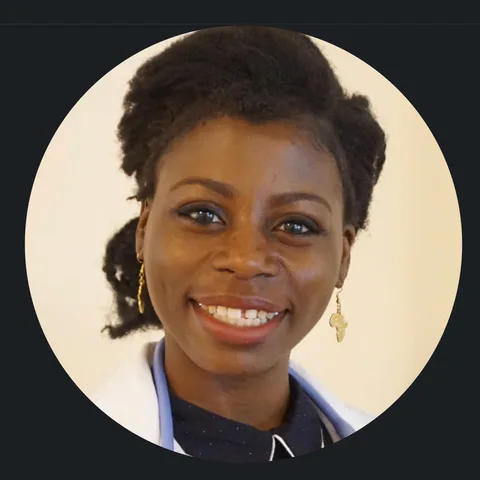
Toun Sogbein is a women's health nurse practitioner with Visana Health, a women's health practice that works entirely by video out of Minneapolis. She handles menopause and perimenopause along with the gynecological and sexual health problems that often sit alongside them, and she came to this work from public health clinics and a community health degree. First visits run 45 minutes, and patients stay with the same provider and can message the care team through the patient portal between visits. Visana's menopause care follows protocols written by Dr. Barbara Levy, and a patient can go the hormone route or a non-hormonal one after talking it through. Labs and imaging get ordered near home when they are needed, and optional health coaching covers food and exercise for anyone who wants that support. Many patients reach Visana through an employer or health plan, and the site has a start page where you look up yours.
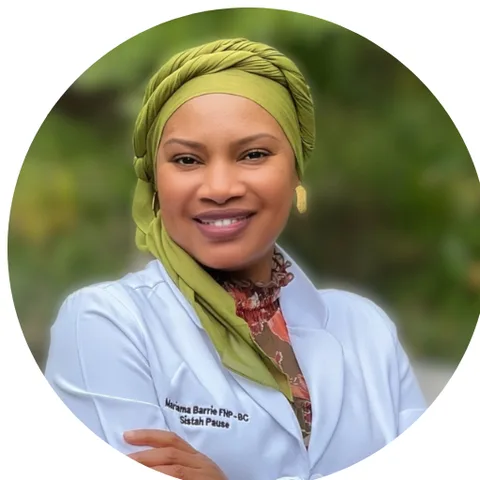
Sistah Pause is a virtual practice for Black women 35 and older, and Barrie says midlife hormone care is the only thing it does. Every new client starts with a paid assessment called Pause, Sis Discovery, which pairs an intake and baseline labs with a 60-minute video review and a written summary of what was found and what to treat first. No prescribing happens at that step. Treatment begins only if you enroll in the six-month program that follows, where she adjusts the plan, repeats labs and handles check-ins through the portal between visits. Hormone therapy is one option rather than the default, and she also uses thyroid medication, non-hormonal medication and prescription weight-management drugs when she thinks they fit. She writes that her own experience with hormonal changes and overlapping symptoms shaped how she practices, and she is direct that this care sits alongside your primary care doctor and gynecologist instead of replacing them.
Casey Norton is a nurse practitioner at Midi Health, a virtual clinic that focuses on perimenopause and menopause. She has worked in women's health for about ten years and says she chose the field after seeing how often women's concerns were brushed aside. Visits happen by video, starting with a half-hour first visit and shorter check-ins to adjust the plan. She offers both hormone and non-hormone treatment and follows Midi's research-based protocols, with labs when needed. She talks about the isolation many women feel in midlife and puts real weight on telling them they are not alone. You can book with her directly from her bio, though choosing her may mean fewer open times than booking any Midi clinician.
Dr. Bernardy is a family physician who runs a direct primary care practice in south Charlotte with one other doctor. Membership covers unlimited office visits of 30 to 60 minutes, direct messaging, and phone or video visits, with same-day or next-day appointments. Menopause care sits inside her general women's health work alongside Pap smears, pelvic exams and birth control. She spent years as national medical director for an employer-based primary care company and taught residents at the University of Colorado. The office has its own pharmacy with medicines at wholesale prices and a physician-supervised weight program. You can book a free video meet and greet with her before joining.
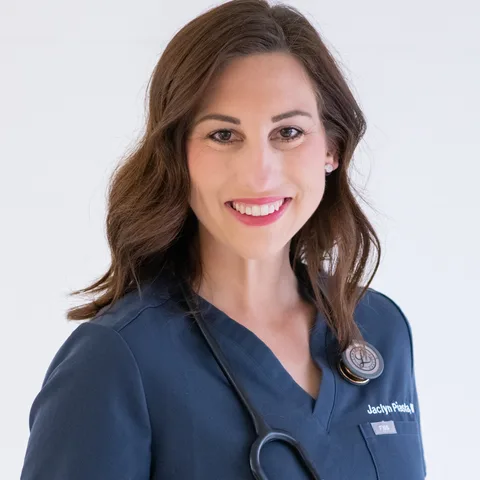
Jackie Piasta runs a small solo membership practice in East Cobb focused on hormones, perimenopause and menopause, and midlife metabolic health. New patients start with a nurse-led pre-visit to line up labs and then an hour-long consultation with her, and ongoing care after that requires joining the membership. Members message the team through a portal and a text line, and follow-ups run 30 to 40 minutes in person or by video. She prescribes estrogen, progesterone and testosterone but does not offer hormone pellets. She is also an obesity medicine specialist who prescribes GLP-1 weight medications and treats thyroid, bladder and bone problems. New patient appointments are booking two to three months out, and she teaches menopause care to nurse practitioner students at Vanderbilt.
Bold Wellness is Torrie Clontz's own virtual practice for women in midlife, run from Las Vegas and open to patients in about fifteen states. Care starts with a two visit intake that includes a wide blood panel drawn at a lab near you and a follow up to go through the results and set a plan. After that most patients stay on a monthly membership that covers prescription changes and messaging with her through the patient portal. Alongside hormone therapy she runs a weight and metabolic program using GLP-1 medication, and she adds functional tests such as gut, cortisol and vaginal microbiome panels when they fit. She is clear that she is not a primary care provider or an OB-GYN, so patients need to keep their own and see her for the hormone and midlife side. Her own hypermobile Ehlers-Danlos diagnosis, which came after a circus career ended in injury, is why she started the practice and she treats that alongside hormones.
Dr. Jordens runs a small practice for women in midlife and is also board certified in obesity medicine, so weight and metabolic health come up alongside hormones. The first visit is a full hour, follow-ups run 45 minutes, and ongoing care is a six-month membership with messaging through a patient portal. She prescribes estrogen, progesterone and sometimes testosterone in standard forms like patches, gels and pills. She treats vaginal estrogen as first-line for dryness and offers non-hormonal options like fezolinetant for women who can't or don't want to take hormones. She says there is no set age limit for staying on hormone therapy and reviews the plan each year. This is specialty care, not a replacement for your primary care doctor, and there is a free discovery call before you book.
Dr. Menn is an OB/GYN who sees menopause patients only by video, and only women living in New York, Connecticut, Vermont or Florida. She survived breast cancer more than 20 years ago, went through premature menopause herself and carries a BRCA mutation. A lot of her practice is breast cancer survivors and BRCA carriers who want help with menopause symptoms and hormone questions. The first visit is an hour long. It covers your history and a risk check for heart, breast and bone health, and ends with a written plan that may include hormone therapy, vaginal hormones or non-hormonal medicine. New patients email the office first and are then told which visit to book. She works alongside your own gynecologist or oncologist rather than replacing them.
Olive Tree Medical is a small concierge practice in Wellesley run by two women physicians who keep the panel to a few hundred patients. Dr. Walkey is a primary care internist who is also board certified in lifestyle medicine, and she became a Menopause Society Certified Practitioner in 2024 to focus on women's health in midlife. Membership covers a long annual exam and a schedule of follow-up visits, with a lot of care happening by phone, text, email and video in between. Health coaching, nutrition consults, fitness testing and stress management are folded into membership rather than billed on their own. Walkey was diagnosed with breast cancer in 2020 and says it pushed her toward the prevention and lifestyle work she now does with patients. New members start with a free in-person meet and greet, and places are limited, so the practice adds people to a waiting list once it fills.
Marissa runs a solo cash-pay telehealth practice based in Santa Fe and sees women from their mid-30s onward for perimenopause and menopause care anywhere in New Mexico. Care starts with an hour-long first visit and then shorter follow-ups every few months until treatment is stable, with portal messaging in between. She mostly prescribes FDA-approved bioidentical estradiol and progesterone that any local pharmacy can fill, and says most women will not need a compounding pharmacy. She does not order a standard lab panel for everyone and often decides on hormones from symptoms and history alone. She wants mammograms up to date before hormone therapy starts, and she also prescribes testosterone for low desire and non-hormonal options when hormones are not a fit.
Diana Kumar is a board certified OB-GYN who co-founded Gliss Wellness, a virtual practice built around perimenopause and menopause. All care happens by video and secure messaging, so there is no office to visit. A menopause visit runs about 30 minutes and ends with a plan and prescriptions for an initial three month period, followed by a check-in visit before refills continue for the rest of the year. She prescribes hormone therapy when it fits, can order labs and scans, and sends prescriptions to the patient's own pharmacy. She also sees women for weight counseling and for urgent gynecology problems handled through a short written form. Her stated areas of interest are PCOS, sexual dysfunction, bone health and longevity medicine.
Jamie Wendt sees patients through Midi Health, a women's health practice that works only by video. She started in 2008 as a labor and delivery nurse and spent about a decade there before qualifying as a nurse practitioner in 2019, and she has worked in women's health throughout. About three years ago she shifted her focus to midlife and menopause care, which she calls the most meaningful work of her career. A first visit runs 30 minutes and return visits run 15, and care plans draw on FDA-approved hormone therapy, non-hormone prescriptions, labs and supplements. She writes about spending a year with one patient finding the right mix of hormone therapy and medication after a history of severe postpartum depression. If you need a physical exam or imaging, Midi refers you to someone local and keeps managing the rest by video.
Olga Ihnatsenka practices family medicine and is also board certified in lifestyle medicine and obesity medicine. She worked as a physician in Belarus before moving to the US, then trained at the University of Florida and stayed on as clinical faculty. Care here is a direct membership, and new members start with two 60 minute appointments before settling into monthly 30 minute visits with messaging in between. The practice prescribes FDA approved hormone therapy and testosterone gel for women, and says it generally does not use compounded hormones. Women who would rather not take hormones are offered non-hormonal medication and lifestyle changes instead. She writes the practice's blog series on estrogen, progesterone and testosterone, and she talks about using lifestyle medicine through her own menopause transition. Members must live in Florida, and visits can be in person in Gainesville or by video.
Faubion is an internist at Mayo Clinic in Jacksonville and sees patients through its Women's Health Specialty Clinic. She founded and directs the Mayo Clinic Center for Women's Health, and every condition listed on her own clinical page is a menopause or female sexual health one, so midlife care is the whole of her practice. The clinic runs two routes for a new patient, a menopause consultation that covers natural, surgical and cancer treatment induced menopause as well as primary ovarian insufficiency, and a sexual health consultation for low libido and painful sex. Her page says she helps women work through hormone therapy and understand their options. Appointments go through Mayo's central request process, which in most cases needs no referral, and established patients message her team through the Mayo patient portal. She also practices at Mayo's Rochester campus, and away from work she grows orchids and cooks.
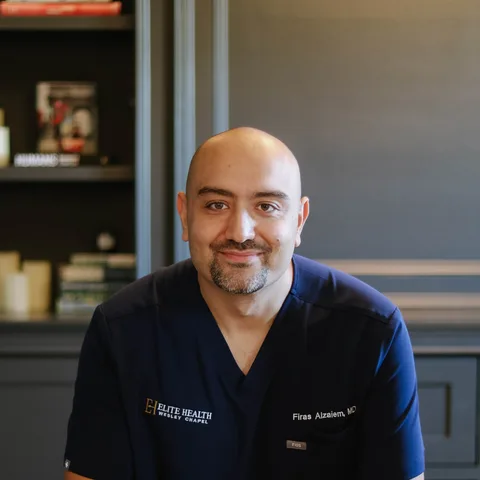
Dr. Alzaiem is an internal medicine physician who runs a membership practice in Wesley Chapel. His women's hormone program is for perimenopause, menopause and after, and it starts with hormone and metabolic lab testing before a treatment plan is set. Visits can be in person or by video, and members have direct access to him between visits. Hormone care can be a standalone membership or added to his primary care membership.
Dr. Ritch is a gynecologist with fellowship training in minimally invasive surgery, and alongside menopause care much of her work is with fibroids, endometriosis, pelvic pain and abnormal bleeding. In 2026 she moved to a membership practice that no longer bills insurance, and she limits how many patients she takes so visits can run long. Membership covers a yearly in-depth exam that looks at hormones, symptoms and history, plus office and video visits through the year. She prescribes hormone therapy and treats vaginal dryness, painful sex and low libido, and most office procedures such as hysteroscopy, biopsies and IUD placement are included. Members who need surgery with her pay a reduced surgical fee. An outside company called Monarch handles scheduling, records and after-hours virtual urgent care.
Jackie Stone, MD sees women entirely by telehealth, in a practice she runs alone. She is board certified in obstetrics and gynecology and in obesity medicine, and treats perimenopause, menopause and primary ovarian insufficiency alongside PCOS, genitourinary symptoms, sexual wellness, and skin and hair changes. First visits run a full hour and cover past records, labs and a treatment plan. Ongoing care is by monthly membership or visit by visit, with direct messaging for members.
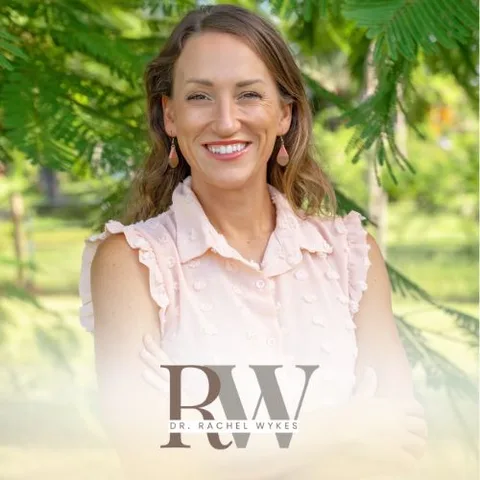
Dr. Wykes is an OB-GYN with Lee Physician Group who sees menopause patients at the Lee Health women's clinic at Cape Coral Hospital. She sees women in person there and also by video for anyone located in Florida. New appointments go through MyChart or the Lee Health app, and her own site admits openings are often scarce, so it offers a request form that works with her scheduling team to find a time. Her site says she gives priority scheduling to women who join her online community. She writes plain-language articles on perimenopause and life after menopause that walk through hormone therapy, vaginal estrogen and non-hormonal medicines.
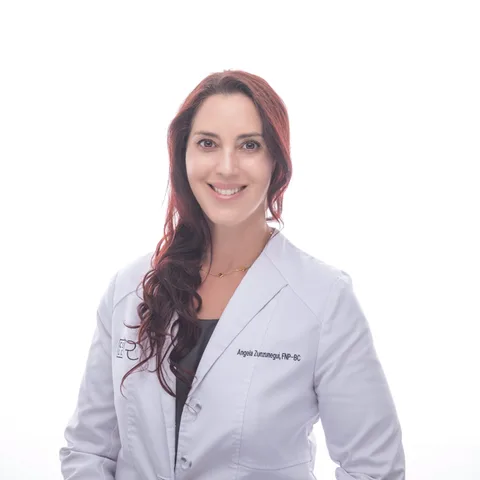
Angela Zunzunegui works at Cosmetic Skin and Laser Center and its wellness arm, seeing patients on Marco Island and in Naples. Most of her work is aesthetics such as Botox, fillers and skin treatments, and she also runs the hormone side of the practice for women in perimenopause and menopause. Hormone care starts with blood testing and a visit to go through symptoms, then a plan that can use pellets, topical gels and creams, oral progesterone or vaginal cream, adjusted over time as labs and symptoms change. She also handles medical weight loss with GLP-1 medication. Before moving into aesthetics she spent 15 years as a nurse in labor and delivery, which she says is why she kept working with women through different stages of life. New patients book online and pick either an aesthetic or a regenerative visit with her.
Hope King runs a small nurse practitioner owned practice in Ormond Beach that combines direct primary care with hormone care for women in perimenopause and menopause. She worked as a nurse from 2002 and later as a nurse practitioner in urgent care, family practice and mental health before opening her own practice. There are no medical assistants on purpose, so patients deal with her directly and can call or text her. Her menopause care leans heavily on metabolic health, pairing hormone therapy with a dietitian-built anti-inflammatory nutrition plan and supplements guided by bloodwork. She is trained in bioidentical hormone therapy and also prescribes non-hormonal options for low libido. Visits are in person or by video, and patients join through a membership.
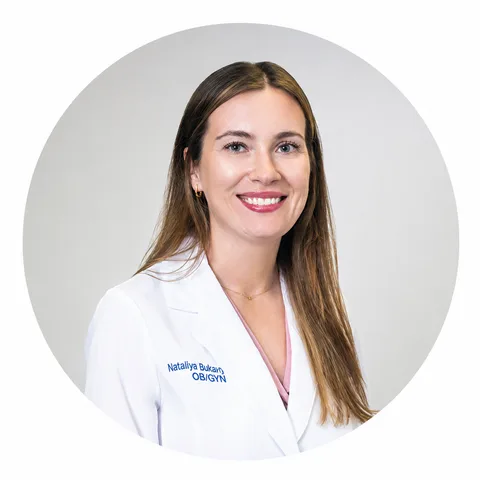
Women's Care is a large OB-GYN group, and Dr. Bukavyn sees patients at its Brandon, Tampa and Ruskin offices. Her practice is full-scope obstetrics and gynecology, and her own page names menopause care as a special interest of hers. Her booking page lets a patient pick menopause, perimenopause, a menopause follow-up or a hormone therapy consultation by name, so a midlife visit can be booked with her rather than with the group in general. She also handles bladder and pelvic floor problems, osteoporosis and hormonal hair and skin complaints, along with in-office procedures such as hysteroscopy, polypectomy and IUD removal. The group bills insurance, and intake paperwork arrives by text through a mobile check-in app a few days before the visit. She is board-eligible and trained in Michigan before moving to Florida, and she says she puts particular effort into comfort and pain control during in-office procedures.
Wendy Ronco is a nurse practitioner at a large primary care practice in Exton, and her work there now centers mostly on menopause care. To see her you have to be a patient of the practice with one of its clinicians as your primary care provider. New patients can enroll with the practice and then book with her. She sees patients in the office and also does menopause visits by video on Tuesdays and Wednesdays, for patients who are in Pennsylvania at the time. She has spent her whole career in women's health and obstetrics and also handles gynecology such as Pap smears and IUDs. The practice's clinicians also run a free on-demand video series on menopause.
Empowered Wellness for Her is a nurse practitioner led clinic in New Albany that runs on memberships rather than one off visits. Everyone starts with an initial care consultation, and after that Courtney recommends one of three plans. One is a six month plan for women who are starting hormone therapy or still sorting out perimenopause symptoms, and the most involved plan adds more testing and monitoring for the long term. There is also a nutrition and coaching plan run by the practice's registered dietitian that does not include nurse practitioner visits or prescriptions, so it is worth checking which plan covers what you need. Beyond hormones the practice works on weight, sexual health, and care for breast cancer survivors and women at high risk. Courtney does a monthly women's health segment on a Columbus morning show, and the practice messages with patients through a secure texting app.
Dr. Carol runs a small concierge practice for women in perimenopause and menopause, and she is going through midlife herself. She spent about 20 years as an emergency physician before turning to menopause care. Care starts with a free 30-minute video call. After that comes a package of two long visits, each 60 to 90 minutes, and you can message her between and after them. Visits can be at her Manhattan office, by video, or at your home or workplace. The visits look at symptom treatment along with bone, heart and breast cancer risk. She does not replace your own doctors, so you still need a primary care doctor and a gynecologist for exams and mammograms.