137 practitioners have an office in Virginia, and 129 more can see patients here by telehealth. 178 of them are certified by the Menopause Society, and the most are in Richmond, Virginia Beach and Fairfax.
Dr. Garnica runs a small online practice that treats only menopause, with virtual visits for women who live in Virginia or Georgia. Care starts with a package made up of a 60 minute first visit and two 30 minute follow ups, and patients can message her through the platform chat between visits. She prescribes hormone therapy or other options through shared decision making, and orders labs or imaging only when needed. She works alongside your regular doctor, so you need your own primary care provider to be seen. She is fluent in Spanish and sees patients in either language without an interpreter. She says her interest comes from watching her mother go through an early and difficult menopause, and she opens each visit with a minute of focused breathing with a bell.
Dr. Cothran spent fifteen years as a gynecologist in private practice before opening Meno-Start in 2024 to focus on perimenopause and menopause. Care runs through an annual concierge membership that plans the first year as four quarterly visits, starting with a full assessment and a hormone consultation and ending with an annual gyn exam. Visits last an hour, in person in McLean or by video, and members can text and email her directly. She prescribes hormone therapy, including testosterone for some women with low libido, and GLP-1 medications. What sets the practice apart is an on-site gym, where co-founder and personal trainer Dulany Washington works with members on strength and metabolism. You can start with a single long consult that counts toward the membership if you join, or book a free 15-minute call first.
Dr. Christina Mutch co-founded this small direct primary care practice in Williamsburg with her husband, Dr. Jake Mutch, who is also a family doctor. She is the practice's menopause doctor and trained in menopausal hormone therapy through the Heather Hirsch Academy. Menopause care is part of an all-inclusive family medicine membership, not a separate program, so she is also your primary care doctor. New members start with a new-patient visit of an hour or more, including a physical exam and advanced labs. After that you can reach the doctor directly by text, email, phone or video, and same-day or next-day visits are available. The practice doesn't bill any insurance, but people on Medicare can join under a private agreement.
Dr. West is an internist who runs a small concierge primary care practice in Fairfax with a strong focus on women's health. Members get unlimited unrushed visits and can reach her directly by cell phone or text, with telehealth visits when appropriate. Her menopause and perimenopause care is only offered to members, not as a one-off consultation. She is a certified clinical densitometrist who has read thousands of bone density scans, and she once directed the Inova Women's Comprehensive Health Center. The practice has paused new members and even its waitlist for now, but you can sign up for updates on when it reopens.
Dr. Varys is a family and lifestyle medicine doctor at Carytown Direct Primary Care, a membership practice in Richmond that she opened with her husband, who is also a family physician. She names women's health and menopause care, weight loss medicine and pediatrics as her main interests, and she sees patients of all ages. The practice treats low estrogen in women with hormone therapy and also prescribes weight loss medication. Members get unlimited visits and can call or text their doctor directly, with same or next day appointments. IUD insertions and a few other procedures are done in the office. She went to medical school in Prague and says she opened the practice because care should be a real conversation rather than a rushed appointment.
Dr. Cleveland is a gynecologist who left insurance-based practice to open her own direct-pay clinic in Salt Lake City. You see her at every visit. First visits run an hour and follow-ups half an hour. Most patients join a monthly membership that covers unlimited visits, messaging between visits and yearly labs, but you can also book single visits. She talks through the benefits and risks of hormone therapy and also offers non-hormonal options. She has extra training in obesity medicine and prescribes GLP-1 drugs. She also does gynecologic procedures in the office and outpatient surgery.
Diana Kumar is a board certified OB-GYN who co-founded Gliss Wellness, a virtual practice built around perimenopause and menopause. All care happens by video and secure messaging, so there is no office to visit. A menopause visit runs about 30 minutes and ends with a plan and prescriptions for an initial three month period, followed by a check-in visit before refills continue for the rest of the year. She prescribes hormone therapy when it fits, can order labs and scans, and sends prescriptions to the patient's own pharmacy. She also sees women for weight counseling and for urgent gynecology problems handled through a short written form. Her stated areas of interest are PCOS, sexual dysfunction, bone health and longevity medicine.
Dr. Makkiya runs a small gynecology practice in Vienna where menopause and sexual health are one of four main areas of care. She has a particular interest in helping cancer survivors, including women after breast cancer, manage menopause symptoms and sexual health. She sits on a global committee of the International Society for the Study of Women's Sexual Health. She is also a gynecologic surgeon who does vaginal and robotic hysterectomy and treats prolapse and urinary incontinence, so one doctor can cover a lot of midlife care. New patients can book online through the practice portal, and video visits are offered through the same system. She speaks English and Arabic.
CaliberMD is Dr. Belardo's own virtual practice for women in midlife, and she treats menopause symptoms and weight together instead of in separate appointments. She is certified in both obesity medicine and menopause care, and she writes openly about her own perimenopause and weight changes. Care runs as a six-month membership that starts with a 60-minute first visit and a nutrition planning session, then moves to monthly video follow-ups with portal messaging in between. She prescribes menopausal hormone therapy when it fits and also works with women who would rather not take medication. The practice does not do primary care, so you need to keep your own primary care doctor. A free Meet and Greet call is available before you sign up.
Next Chapter Women's Health is a solo, physician-led practice Dr. Middleton founded in 2025 after more than twenty years in family medicine, focused specifically on peri- and post-menopause rather than general women's health. All visits are currently conducted by telehealth and patients must be physically in Virginia at the time of the visit. The site says in-person visits are planned to begin in summer 2026. The first visit is a one-hour consultation covering history, symptoms and goals, with labs and studies ordered when indicated, and follow-ups run up to thirty minutes. She works alongside a patient's primary care provider or gynecologist and explicitly does not replace them for annual gynecologic and breast exams.
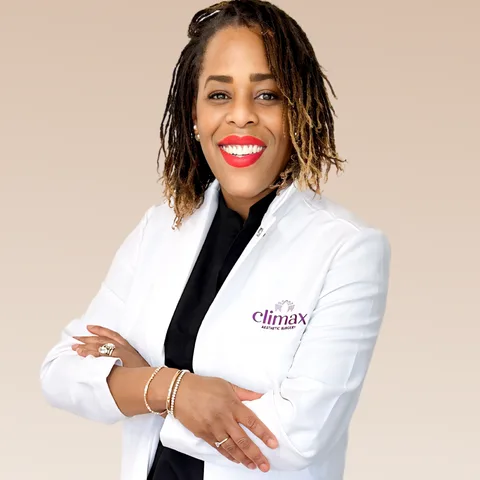
Dr. Ojo-Carons founded Climax Aesthetic Surgery, a sexual health and cosmetic gynecology practice with offices in Virginia Beach, Columbia in Maryland, and New York. She is a gynecologist who also trained in cosmetic gynecologic surgery, so much of the practice centers on sexual function, urinary leakage and vaginal dryness alongside hormone therapy. Hormone care starts with a symptom review and lab testing, and she prescribes bioidentical hormones, estrogen, progesterone, testosterone and pellets. Pellet therapy is sold as a yearlong membership that covers the insertions and lab work. New patients usually begin with a discovery call, and virtual consultations can be booked online. The practice treats men as well as women and also offers injectables and other aesthetic work.
Dr. Hammoud runs her own small gynecology practice in Annandale, and menopause care is one of its named services. She lists hormone replacement among her areas of expertise. For women with severe or complex symptoms she also looks at bone health, heart risk, mood and urinary problems. She is a minimally invasive surgeon and does office hysteroscopy, so gynecologic procedures can be handled in the same practice. The office does no obstetrics, and she speaks Arabic and French as well as English. Visits can be in person or by video.
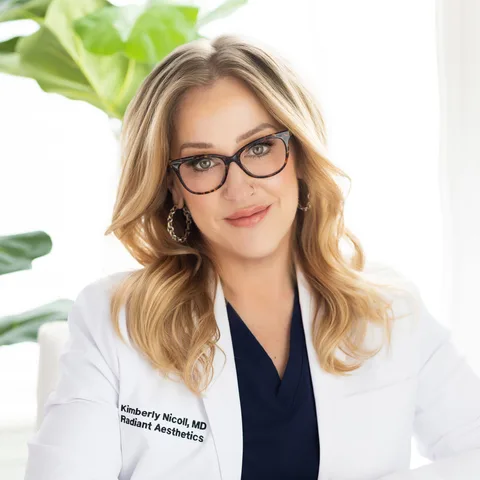
Dr. Nicoll is an emergency and lifestyle medicine physician who runs a med spa in Lansdowne and treats women in perimenopause and menopause. New hormone patients start with a short screening visit with a nurse. After that comes an hour-long consultation with her where she goes through the labs and sets the plan. She prescribes patches, gels, injectables, vaginal inserts, compounded hormones and pellets, and she also treats men for low testosterone.
Dr. Carol runs a small concierge practice for women in perimenopause and menopause, and she is going through midlife herself. She spent about 20 years as an emergency physician before turning to menopause care. Care starts with a free 30-minute video call. After that comes a package of two long visits, each 60 to 90 minutes, and you can message her between and after them. Visits can be at her Manhattan office, by video, or at your home or workplace. The visits look at symptom treatment along with bone, heart and breast cancer risk. She does not replace your own doctors, so you still need a primary care doctor and a gynecologist for exams and mammograms.
Dr. Wang is an internist who spent about 20 years in primary care and is also board certified in obesity medicine. She now sees women in perimenopause and menopause by video only, as an affiliate clinician of Dr. Heather Hirsch's Collaborative membership. Care runs through that membership, which has a one-year minimum and covers visits and messages with no charge per visit, plus group Q&As and coaching sessions. Her approach puts a lot of weight on nutrition, metabolic health and mindset alongside medical treatment. She asks patients to keep their own primary care doctor and gynecologist for hands-on care, since she does not see anyone in person.
Capital Women's Care DC is a group OB-GYN practice near Foggy Bottom, and Dr. Bajaj is the managing partner of the Washington office. She spent nearly two decades doing both obstetrics and gynecology, then stopped obstetrics in 2022 to practice gynecology only, with perimenopause and menopause as her focus. She says she wants to close the knowledge gap around hormone replacement therapy, and she writes publicly about women's health on a site of her own. You book online or by phone, and appointments can be in person or by video. Alongside menopause care the office does in-office procedures and minimally invasive gyn surgery, so a woman who needs both can stay in one place. Worth knowing is that the practice says an annual well-woman visit with the doctor of your choice usually takes one to three months to get.
Jackie Stone, MD sees women entirely by telehealth, in a practice she runs alone. She is board certified in obstetrics and gynecology and in obesity medicine, and treats perimenopause, menopause and primary ovarian insufficiency alongside PCOS, genitourinary symptoms, sexual wellness, and skin and hair changes. First visits run a full hour and cover past records, labs and a treatment plan. Ongoing care is by monthly membership or visit by visit, with direct messaging for members.
Dr. West runs a solo gynecology office in Madison and has been in practice for more than twenty years. Her site lists menopause management and testing among her services, though it does not say which hormone treatments she prescribes. She also treats endometriosis, fibroids, ovarian cysts and pelvic pain, and she does her own surgery at nearby hospitals, so a patient who needs an operation stays with the same doctor. She did her OB/GYN residency at the Hospital of the University of Pennsylvania and is fellowship trained in integrative medicine. Telemedicine is used for things like reviewing results and medication follow-ups, while exams and procedures happen in the office. She also hosts a weekly women's health segment on a local radio station.
Virginia Heart is a large Northern Virginia cardiology group and Dr. Riggs works in its sleep center rather than on the cardiology side. She handles insomnia, sleep apnea, restless legs, narcolepsy and vasomotor symptoms, and she is board certified in sleep medicine as well as pulmonary and critical care. Her stated special interest is women's sleep health during the menopause transition and around pregnancy. Nothing on the site says she prescribes hormone therapy, so the care she lists is sleep focused. New patients call the main scheduling line and fill in health history and registration forms ahead of the first visit, and the office files insurance claims for you. Before returning to Virginia she worked as a critical care attending in Brooklyn and Manhattan intensive care units at the height of the COVID pandemic.
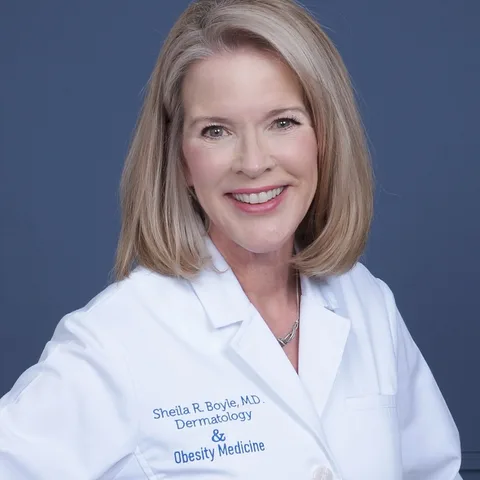
A solo direct-pay practice in Lone Tree whose stated scope is dermatology, cosmetic procedures and medically supervised weight management. The physician is board certified in dermatology and obesity medicine. Every initial visit is by video, with in-person follow-ups by appointment, and the practice does not bill insurance. Hormone replacement therapy is named only as one reason for a new-patient visit on the fee schedule, and no hormone or menopause care is described anywhere else on the site.
Midlife Medicine is Dr. Todd's solo direct care practice in Great Falls, for women in perimenopause and menopause. She spent two decades in pediatrics, including years as an associate professor at Children's National, and left that work in 2025 after her own experience as a patient in midlife. Care starts with a 60 minute consultation, a follow-up eight weeks later is required if you start hormone therapy, and established patients come back once a year after that. Between visits they message her directly through the patient portal. She uses FDA-approved hormones such as estradiol and progesterone, and avoids pellets and compounded products unless there is a medical reason. She also asks patients to keep their own primary care doctor and OB-GYN for routine screening and urgent problems, because this is a consultative menopause practice rather than a replacement for either.
Dr. Long runs a newly opened direct primary care practice in Laguna Niguel. He is a board-certified family doctor with a fellowship in integrative medicine, so menopause care is one part of what he does for adults rather than the whole practice. Hormone therapy evaluation and ongoing dose changes come with the monthly membership, with no separate charge for those visits. He keeps his patient list small and says visits run 45 to 60 minutes, and members call or text him directly instead of going through a front desk. He is fluent in English and Spanish and has training in addiction medicine.
A physician-led longevity and performance practice based in Seattle, where the practitioner is medical director. Care begins with an in-person day in the Seattle area for baseline diagnostics, covering over a hundred biomarkers, body composition, cardiorespiratory fitness, continuous glucose monitoring, genomics and multi-cancer screening. It then moves to quarterly labs and structured medical reviews, with follow-ups virtual or in person. A women's track is described for perimenopause, menopause and after, with hormone and metabolic diagnostics and ongoing telehealth support, and physicians provide prescriptions and referrals as clinically appropriate.
IntimMedicine Specialists is a small Washington DC practice that Dr. Simon founded and still runs as medical director, with two physician assistants who have worked with him since the 1990s. He treats women across the whole reproductive span, and the midlife side of the practice covers menopause and perimenopause, low testosterone, bone loss, sexual pain and sexual function after cancer. His approach to hormones is to balance estrogen, progesterone and testosterone, and the practice says most women can use hormone therapy with few risks. For testosterone he will use gels, injections or pellets, and he says he does not treat on lab values alone. Visits happen in the M Street office or by video, and virtual appointments are offered on Saturday mornings as well as weekdays. New patients submit a form or call and the office rings back to finish booking, and because the practice runs its own clinical trials some patients are offered a place in a study.