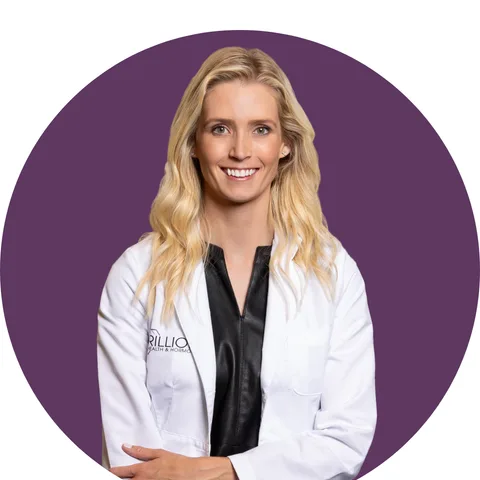
Dr. Long runs a newly opened direct primary care practice in Laguna Niguel. He is a board-certified family doctor with a fellowship in integrative medicine, so menopause care is one part of what he does for adults rather than the whole practice. Hormone therapy evaluation and ongoing dose changes come with the monthly membership, with no separate charge for those visits. He keeps his patient list small and says visits run 45 to 60 minutes, and members call or text him directly instead of going through a front desk. He is fluent in English and Spanish and has training in addiction medicine.
Takes Aetna, Blue Cross Blue Shield +3 · from $75/mo
Alison Farr runs Ascent Healthcare, a small practice near Burlington that offers menopause consultations alongside membership primary care. She worked in emergency medicine and cardiology before focusing on menopause. She takes on higher-risk cases that other clinicians often turn away, including women with BRCA or ATM mutations, a history of breast cancer or a history of blood clots. The first menopause visit runs an hour, and she plans on follow-ups to adjust treatment over time rather than a single visit. Patients can join a monthly membership for portal access between visits or pay per visit instead. New patients currently join a waitlist to see her, and visits are offered in person in Shelburne or by video.
The GYN Lounge is a small gynecology practice in Fresno that Dr. Ikedilo built around perimenopause and menopause care. Most visits happen by video anywhere in California, though the office also does in-person procedures like endometrial ablation, vaginal laser and PRP injections. New patients book a perimenopause or menopause consultation online, fill out history and consent forms beforehand, and get a written cost estimate before the visit. On hormones she lays out both compounded bioidentical options and FDA-approved ones and explains the trade-offs of each, after bloodwork that checks sex hormones, thyroid and metabolic markers. She trained in OB/GYN in Baltimore, spent a year practicing alongside her father in rural Jamaica, and her first four years in California were at a federally qualified health center. A physician assistant who focuses on menopause and hormone therapy sees patients too, so some appointments are with her rather than with Dr. Ikedilo.
Takes Aetna, Blue Cross Blue Shield +2 · first visit $175
Liv HRT is a small Austin practice founded in 2025 by nurse practitioner Kristen Bernal and her husband Adolfo, who runs the office. She is the sole clinician and spent seven years in primary care at an Austin integrative practice beforehand. Care spans bioidentical hormone therapy, testosterone for women, thyroid treatment for Hashimoto's and hypothyroidism, hormone-focused hair-loss treatment, and compounded GLP-1 weight management, prescribed through either retail or compounding pharmacies depending on the case. Patients start with a free 15-minute phone consult, then a 30-minute new-patient visit, with follow-up at six weeks and roughly every six months once a dose is stable. The office is in central Austin and she is licensed to see patients anywhere in Texas by telemedicine.
Allyson Reynolds works at OM Med Spa in Boise, a mostly aesthetic clinic, and runs its hormone therapy program herself. Care starts with a one-on-one visit with her to talk through symptoms, then a blood draw done in the office by the spa's nurse. Once the labs are back she goes over the results with you and settles on a treatment plan. The spa's price list includes hormone pellet placement. She spent 16 years as a registered nurse before becoming a nurse practitioner, and she also treats weight with GLP-1 medicines and skin problems like melasma and rosacea. New patients can book a hormone visit online.
Dr. Schisler runs a direct primary care practice in Bay City, the town she was born and raised in. She spent seventeen years in a traditional insurance-based practice before switching to a monthly membership in 2023. Members get unlimited office visits and can reach her directly by text, email, phone or video chat. Hormone therapy for perimenopause and menopause is one of her stated interests, alongside fitness, nutrition and preventive medicine, and she took Dr. Heather Hirsch's course on prescribing and managing it. She still looks after the whole family, from children to seniors, so menopause care sits inside general primary care rather than in a separate program. New patients enroll online or by phone, and she or her staff call to set up a meet and greet before the first appointment.
Magnolia Direct Family Care is a solo direct primary care clinic that Dr. Cook opened in 2021, after about 20 years working inside the insurance system. She is a family physician who sees patients of all ages, and menopause care sits alongside weight management as her two stated interests. Members pay one flat monthly fee and get same or next-day appointments, office visits that run 30 to 60 minutes, and direct access to her by text, email or phone. Virtual visits are part of the model and she uses them when an in-person slot is not open. For menopause she offers hormone testing and hormone management, and the clinic runs cheap lab panels and dispenses wholesale medications from a small in-house pharmacy. She keeps the patient panel small on purpose, there is no financial commitment so members can cancel whenever they want, and she also serves as medical director for a local hospice.
Harmony Gynecology is a one-doctor gynecology practice in Salt Lake City that Dr. Servoss opened after more than two decades in community hospitals and a large health system. She writes that big patient panels and quick visits were what she wanted to get away from, so she books fewer appointments a day and keeps visits long. Care runs from teenagers through postmenopausal women, with a separate hormone consultation visit and problem visits that cover perimenopause and menopause. Members get direct access to her by secure message, phone, text or video, plus wholesale lab pricing and reduced rates on in-office procedures. Membership is optional and you can pay per visit instead. She does not deliver babies at this office, and she refers out for assisted reproduction and more complex surgery.
Awaken Health is a two doctor direct primary care clinic that Dr. Goluboff runs with Dr. Michele Benjamin, a friend from medical school. Both are family medicine physicians who went on to train in functional medicine, and they see the whole family, children included. Goluboff writes that she is committed to supporting women through perimenopause, menopause and postpartum, and the practice treats those hormonal shifts with nutrition, stress work and bioidentical hormone therapy. Care runs on a monthly membership with a long first consultation, unlimited urgent visits and direct text access to your doctor. New patients start with a free video meet and greet, and the doctors settle on your membership tier during that first conversation. Membership asks for a six month commitment, and the practice is clear that it is not concierge care, so weekend and after hours help is not guaranteed.
Sabia Health is Dr. DeVries's solo direct primary care practice in Durham, built for women roughly 40 to 64 who are going through perimenopause and menopause. She provides all the care herself, in the office, by video, or by phone and text, and she sees patients in English and Spanish. Membership covers a yearly exam and care plan, unlimited visits, direct messaging with her, and cheaper labs, imaging and Pap smears. You do not have to join to be seen. There is a standalone perimenopause and menopause consult that covers symptoms, a hormone plan, and bone, heart and metabolic risk, and it comes with three months of medication and dose adjustments by text or phone. She spent two decades in community health centers, Medicaid managed care and health system leadership before opening this practice, and she also provides gender-affirming hormone therapy.
Jerusalem Makonnen sees patients at One Medical's Grand Lake office in Oakland, a membership primary care practice rather than a menopause clinic. She lists peri/menopause as her area of expertise and otherwise sees patients of all ages for general primary care. Most contact runs through the One Medical app, where members message their care team and use on-demand video visits around the clock. Scheduled visits with her, in the office or by video, are booked on top of the membership and billed to insurance, and the office takes same-day and next-day appointments. One Medical publishes nothing about which hormone treatments its providers use, so what she prescribes for menopause is not stated on the site. She trained at Yale, writes that she wants to create a safe space for everyone, and says she runs, does yoga and gets out to the California beaches with her family.
Dr. Taylor runs A Woman's Wellspring on her own in Carmel and has worked in the area for more than three decades. She works as both a gynecologist and a primary care doctor, so menopause care, the annual exam and general health all happen in the same visit. Every appointment is booked for a full hour, which she writes about as slow medicine and treats as the whole point of the practice. Patients join what she calls a medical cooperative by paying an annual fee, and then pay for each visit at the time of service. The fee also covers her Mini-Medical School, six Zoom seminars a year on topics members choose in a survey. New patients start with a personal practice orientation, while established patients can book online.
Dr Adegbola runs a one-office lifestyle medicine practice in King of Prussia and sees patients in person or by video. She says plainly that she does not do primary care or urgent care, so she works alongside whoever already handles that for you. Hormone care here is bioidentical estrogen, progesterone and testosterone, and she builds the plan from lab panels and body composition data. She also runs a medical weight loss track using GLP-1 medications and a gut health program built on stool and food sensitivity testing. She trained as a physician-scientist and says the metabolic shifts she noticed in her own mid-30s are what pushed her toward this work. New patients start with a consultation and can then pay per visit or join a monthly membership that adds short visits and messaging access in between, though women on Medicare can be seen but cannot join a membership.
Dr. Cernaianu is a board-certified OB/GYN who also holds board certification in anti-aging and integrative medicine, and she runs a concierge practice alongside a separate med spa. Hormone care is a core service, and she prescribes FDA-approved estrogen, progesterone and testosterone products as well as compounded creams and pellets. She is upfront about which routes insurance covers and which are paid out of pocket. Her site says hormone follow-ups run about three times a year, and she avoids writing a year of refills at once. She also evaluates thyroid and adrenal concerns and treats urinary incontinence. Her training began in Bucharest, and she was the first foreign medical graduate admitted to the LSU residency program.
This is a virtual-only practice run by one nurse practitioner, with no office to visit. She spent much of her career at a cancer center caring for women with breast cancer. She saw how treatment can start or worsen menopause symptoms, and that is what pulled her toward menopause care. Patients do video visits, then get lab or imaging orders to complete locally and prescriptions sent to their own pharmacy. She asks that every patient has a gynecologist for routine exams. Follow-up visits and secure messaging run through a patient portal.
Dr. Brode is a board certified urologist who gave up surgery and now runs her own virtual practice for women in perimenopause and menopause, and she sees men for sexual health too. Visits happen by video, and she takes patients in Michigan, New York and Texas. New patients can start with a short introductory call that is only a conversation about whether she is a fit, with no diagnosis or prescribing. Her hormone care stays with FDA approved therapy, and a visit covers sleep, mood, stress and daily life as much as medication. Her urology background shows in what she treats, including bladder leaks, urgency, waking at night to urinate and repeat UTIs alongside vaginal dryness and painful sex. She says going through perimenopause herself showed her how little she and other clinicians had been told about the options, and she went on to take extra training in menopause care.
A women's health and gynecology group specializing in bioidentical hormone replacement for women in perimenopause and after menopause, with a Norfolk office among nine sites across four states. Care runs as an in-person consultation with a board-certified provider, a hormone blood panel including thyroid, and a follow-up visit to review results and set a plan, followed by weekly or bi-weekly nurse-run injection visits and periodic lab check-ins. Hormones are supplied as sublingual progesterone, sublingual biestrogen and injectable testosterone. Alongside hormone care the practice offers routine gynecology, contraception, platelet-rich plasma treatments for sexual wellness and hair, weight medication and aesthetics.
Dr. Steinberg spent more than two decades as a Seattle area gynecologist before leaving her previous practice in 2024 to open her own, centered on hormones, perimenopause and menopause. She does not work with insurance, which she says lets her give each patient more of her time. New patients start with an hour-long visit, by video or in person at an office in Bothell, and shorter follow-ups come after labs or starting treatment. Patients who would rather not pay per visit can choose one yearly fee that covers all visits. She also looks after bone health, heart disease prevention and bladder problems, but no longer does surgery and refers out for it.
Female Focused is a telehealth-only practice started by four friends, and Dr. Bernstein-Lawler is one of the founders. New patients begin with a long video visit and then follow up every four weeks to three months, depending on what is being treated. There is a separate visit for cancer survivors who want to explore hormone or non-hormonal options based on their cancer history. The founders say they share a commitment to breast cancer survivorship. The practice does not offer hormone pellets because it says the FDA has not approved them. Everything is virtual with no physical exams, so you are expected to keep your own primary care doctor and gynecologist.
Amanda Metz works out of the O'Fallon office of Simply Wurth It, a nurse practitioner owned clinic with four locations around St. Louis. Her corner of the practice is women's health, and she came to it after nineteen years in the field and a doctorate from the University of Missouri St. Louis. New patients start with a free fifteen minute call with one of the clinic's nurses, who takes a history and matches them to a provider, and after that they book straight into her calendar. Hormone care here leans on Biote pellets, testosterone injections and peptide add ons, with hormone and thyroid panels run in house and prescriptions filled at the clinic's own pharmacy. Follow ups, lab reviews and medication changes can all be done by video anywhere in Missouri. The O'Fallon office is tucked inside a beauty and wellbeing studio and also offers pelvic floor strengthening sessions.
Dr. Davis trained in pediatric emergency medicine and child abuse pediatrics, and her own perimenopause led her to open this menopause practice. She prescribes FDA-approved hormone therapy and doesn't stop it by default at 60 or 65. The first visit runs 50 minutes. After you start hormones there's a required check-in about two months later, then one visit a year once your dose is settled. Most care happens by video for women who are in California at the time of the visit, and the San Diego office also sees patients in person. The practice doesn't act as your primary care office, so you need your own doctor for routine care.
Marissa Langford is one of the nurse practitioners at Complete Midlife Wellness Center, a practice started by an OB/GYN in 2020 that sees only midlife women. She works from the Cypress office, and the practice also sees patients by video. New patients fill out a request form on the site and the care team calls back within one business day to schedule. Starting care comes in two set levels, a 45-minute visit with a limited lab panel or a 90-minute visit with a fuller panel and a follow-up visit included. She moved into women's health in 2022 after years in primary care and pediatric wellness, and she is trained in bioidentical hormone replacement and pellet placement. The practice says it has placed more than 15,000 pellets and will recommend them only when they are the right fit, and Marissa sees patients in Spanish as well as English.
A physician-led longevity and performance practice based in Seattle, where the practitioner is medical director. Care begins with an in-person day in the Seattle area for baseline diagnostics, covering over a hundred biomarkers, body composition, cardiorespiratory fitness, continuous glucose monitoring, genomics and multi-cancer screening. It then moves to quarterly labs and structured medical reviews, with follow-ups virtual or in person. A women's track is described for perimenopause, menopause and after, with hormone and metabolic diagnostics and ongoing telehealth support, and physicians provide prescriptions and referrals as clinically appropriate.
The Little DPC is a small direct primary care clinic in downtown Oklahoma City run by Danielle Vinnedge and her husband, a family physician. Menopause care sits inside a flat monthly membership, so there are no separate visit fees and you can text, call or email your clinicians directly. Your first visit is in person, and later visits can be by video or phone for Oklahoma residents. Danielle spent her early career in rural family medicine in a small western Oklahoma town, and she says she especially enjoys helping women through perimenopause and menopause. New patients usually meet both clinicians at the first visit. The clinic books new patients several months ahead.